Punnett Square Calculator

Build Punnett squares for genetic crosses. See genotypic and phenotypic ratios instantly.

Loading interactive simulation...

Combinatorial Probability of Mendelian Inheritance 🖖

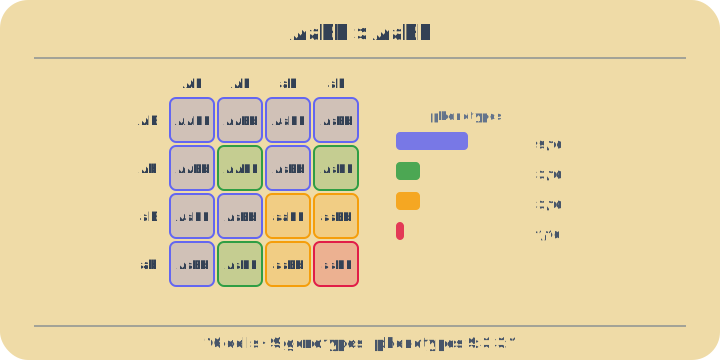
Mendelian inheritance is an exercise in rigorous combinatorial probability. The Punnett square systematically calculates the binomial expansion of independent allelic segregation during meiosis. This matrix multiplication of gametic frequencies yields precise genotypic and phenotypic ratios. It transforms the seemingly random process of genetic inheritance into a deterministic mathematical model, accurately predicting the statistical distribution of traits across subsequent generational cohorts.

A grid that counts every combination 🖖

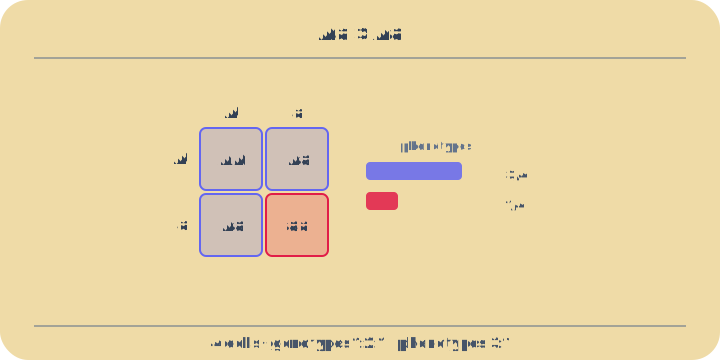
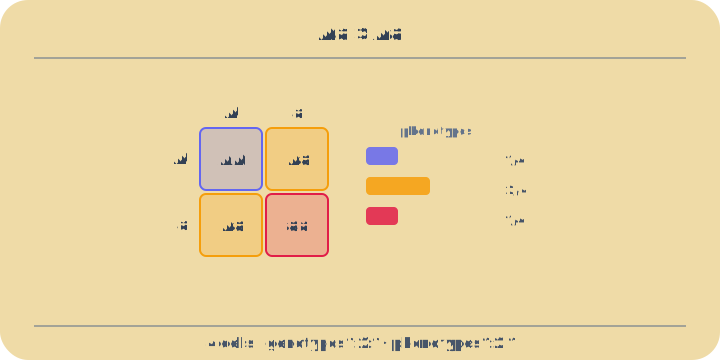
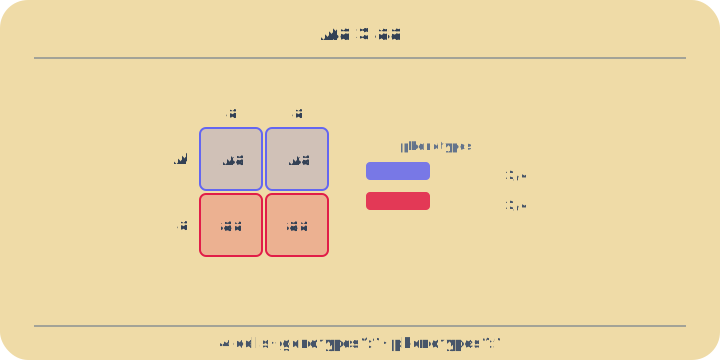
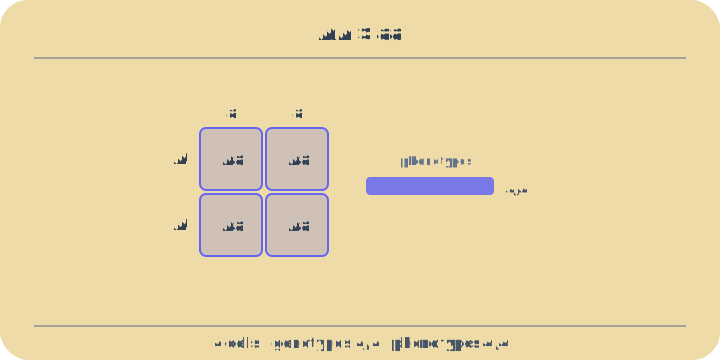
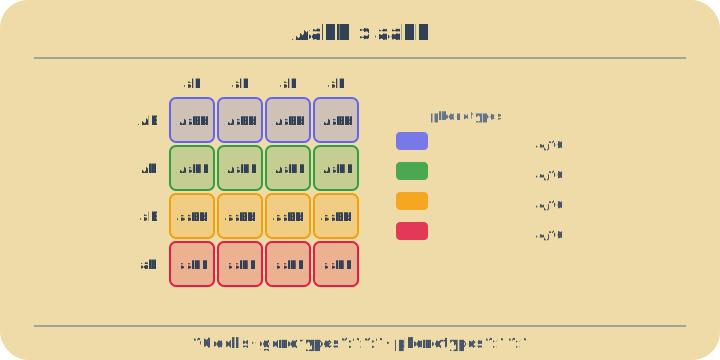
A Punnett square is simply a table: list the alleles one parent can put into an egg along the top, the other parent's down the side, then fill each cell with the pair that meets there. Counting the cells gives the odds. Cross two Aa parents and you get the famous 3:1 ratio — three offspring showing the dominant trait for every one showing the recessive. Dihybrid crosses expand this to 9:3:3:1.

A cricket question that founded population genetics 🖖

Reginald Punnett, who popularized the square around 1905, was once puzzled about why dominant alleles didn't simply take over a population. He put the question to his cricket partner, the mathematician G. H. Hardy. Hardy's one-page reply in 1908 became the Hardy-Weinberg principle, the foundation of population genetics — showing that allele frequencies stay constant unless something disturbs them.

Example problems