Interactive Math & Science Lessons
Not just answers — real insight across math, science, and curiosities.
473 interactive lessons · 60 chapters that run in order · 51 articles
Start here
Short sequences rather than single tools. Each step hands the next one something specific, so they are worth doing in order.
Mathematics
-
One number for many: summary statistics
Four tools that build one lesson: a summary number is a lossy compression, and how you compress determines what the summary is honest about. Each step hands the next one a specific limitation of single-number summaries.
-
The triangle rules, and where they come from
Six tools that build the standard triangle and circle results in the order they actually depend on each other. Nothing here is asserted: every rule arrives as a consequence of the one before it, and the route ends by putting the first one back on a grid, where it turns into the distance formula.
-
Writing a number down
Three tools and one argument: some numbers cannot be written out in full, the best short version of one can be searched for rather than guessed, and cutting a number short has a cost you can measure.
-
Solving for x, from the minus sign upward
Six tools that build equation-solving in the order the ideas actually depend on each other, starting from what a minus sign does and ending with a machine method for three unknowns at once. Every step hands the next one a specific thing: a move, a restriction on a move, or a test for whether a move was legal.
-
Money over time
Four tools that build one idea: money is worth different amounts at different times, and a repeated payment can be collapsed into a single formula. Each step here hands the next one something specific.
-
Orders of magnitude
Three tools, one habit: when quantities differ by factors rather than amounts, stop counting and start counting exponents. The first builds the ruler, the second walks it, and the third puts a number on it with no data at all.
-
When two things land on the same value
The birthday problem looks like a party trick and is actually the standard tool for reasoning about collisions. The second step is where computer scientists meet it again, under a different name.
-
Beyond the quadratic
Four tools, and each one exists because the tool before it runs out. Factorising works when the roots are tidy, the formula works when they are not, division works past degree two, and a rational function is what two polynomials do when one sits over the other.
-
Trigonometric identities and equations
An identity holds at every angle where both sides are defined, which is what lets you trade the function a question gives you for the one it asks about. The chapter starts with the reciprocal functions and the three Pythagorean identities, then the inverse functions a calculator answers with, the equations they start and the compound-angle formulae, and is building towards the double-angle and harmonic forms and proving identities.
-
Circles and waves are the same motion
Three tools, and the point of the sequence is that they are not three subjects. A sine wave is what uniform circular motion looks like from the side, and a swinging pendulum is what it looks like when gravity supplies the turning.
-
Why everything looks straight up close
Five tools on one idea: a smooth curve, magnified far enough, is indistinguishable from a straight line. That single fact is what a derivative measures, what a Taylor series extends, and what a gradient does in more than one direction. The path starts with the angle measure that makes the arithmetic come out clean and ends on a hillside where the steepest slope beats every direction you actually measured.
-
Methods of proof
A proof is a reason that covers every case, including the ones nobody will ever check. These pages build that reason four ways: by induction, by counting things into boxes, by a quantity no move can change, and by pairing things off. The first begins with a formula that gives a prime forty times running and then gives 41 × 41.
-
Differentiation: how rates combine
A derivative is a rate, and each rule of differentiation says how rates combine: through a product, through a function inside another, through an equation nobody solved for y. The last two pages put the rules to work on the questions a course actually asks, how fast something changes at one instant and which choice is best.
-
Fitting a line to data
Seven tools that turn a picture of scattered points into a number you can defend, then ask how the number is found, how much of it to believe, what happens when nobody tells you the answer — and finally how to grade a prediction that was only ever a probability. The route runs through geometry rather than statistics, because the geometry is what makes the statistics honest.
-
Matrices that move things
One question, asked four times with less and less to go on: what does this matrix actually do to space? The columns answer it outright. The eigenvectors answer it for the directions that survive. The SVD answers it when there are none, and PCA points the same machinery at a cloud of measurements.
-
The best reply, and what happens when nobody computes one
Four games and one operation: find the move that answers whatever the other player does. It settles the first game on its own, takes a whole square to locate in the second, and carries a price tag in the third. In the fourth nobody computes it at all and the population arrives at the answer anyway.
-
Infinite series and convergence
An infinite sum is a limit of finite ones, and the limit depends on things no finite sum cares about: the order of the terms, and where the nearest singularity sits, even when it is off the real line.
-
Three numerical methods, and where each one gives out
Newton's method, Simpson's rule and Euler's method all run on the same engine: inside a small enough interval, treat the curve as straight. Each one therefore has a failure that is not a bug, and the useful knowledge is which failure belongs to which method. Every step here hands the next a named error and the rate at which it shrinks.
-
Techniques of integration
Differentiation is a procedure and integration is a search, so the trainers in this chapter grade an answer one way: differentiate it and compare it with the integrand. Substitution and parts are the chain and product rules read backwards, partial fractions covers the one large family where an elementary answer always exists, and the last page proves that for e⁻ˣ² none does.
-
Applications of integration
An integral is an amount piled up: area, distance, volume. This chapter starts with the theorem that ties piling up to rates of change, and builds from there to areas between curves, motion, and volumes found by slicing.
Physics
-
What Ohm’s law leaves out
Ohm’s law, as its own page says, describes one resistor at a steady temperature, on direct current, with nothing else in the loop. Each page after it puts back one of the things that sentence left out: a second component, the wire, the battery, a circuit that will not reduce, and a voltage that changes.
-
Energy instead of forces
Two tools and one shortcut: when all you want is speeds and heights, you can skip the forces entirely and let energy keep the books.
-
Bending light
A lens is a boundary that somebody curved, and no page on this path introduces physics the first one does not already contain. What changes is how much is asked of it: one surface, then an ideal lens, then a piece of glass.
-
Simple machines: trading force for distance
Five machines and one bargain. None of them creates energy, and every one of them lets you choose how to spend it: a smaller force over a longer path, or the reverse. Each step hands the next a specific piece of that bargain, and by the end you can read any machine by asking two questions about it.
-
Resistance, then reactance
A capacitor has no resistance and limits the current anyway, and what it sets is a time rather than a number of ohms. The second page shows that the time belongs to any system with one store and one drain. The third adds a second store, and the time becomes a frequency.
-
Throwing things
Three tools, and the third one breaks the first two. Constant acceleration has a closed-form answer, so the first two steps are algebra. Air resistance is not constant, and from there the only honest method is to integrate it step by step.
-
Water out of a tank: one speed, spent two ways
Two tools built on a single result. Water leaves a hole at exactly the speed a stone reaches falling the same depth, and everything else follows from where that speed is spent: sideways it is a projectile, downwards it is the tank emptying itself.
-
From one spring to a standing wave
One restoring force, followed as far as it will go. A mass on a spring oscillates, a row of them passes the oscillation along, two of those meeting decide whether to add or cancel, and a boundary at each end throws away every frequency that does not fit.
-
Wave optics
Ray optics says light goes straight and an edge casts a sharp shadow. Each page here draws that answer as a ghost beside the wave answer, and what stands in the light's way changes from page to page: two surfaces, one slit, a round aperture, and finally an opaque disc whose shadow is bright at its centre.
-
Least time, least action
The path a light ray takes, a sliding bead follows and a thrown ball flies is the one along which a small change makes no first-order change in a total: time for the first two, action for the ball. Every page lets you bend the path and watch the total barely move, and two of them find a path whose total is stationary without being least.
-
Rotation and angular momentum
A spinning body carries a vector, its angular momentum, and nearly everything surprising about rotation is that vector refusing to change. Pull your arms in on a turntable and you spin faster; a wheel turns sideways instead of falling; a racket flips; a pendulum's plane stays put while the floor turns under it.
-
What is not a resistor
Ohm's law describes one kind of part. The five here store energy in a voltage or a current, conduct in one direction, amplify, and amplify precisely, and each is unreliable on its own: a transistor's current gain β varies threefold between samples of the same type. The circuit around a component is what makes it predictable, and every page shows how.
-
Quantum mechanics: matter as waves
Light arrives in packets, and the same constant h then gives every particle a wavelength. The rest follows from taking that wave seriously: made to fit a box, it has a lowest energy that is not zero; it leaks through walls it cannot climb; and squeezed into a small space it spreads over many wavenumbers, which is the uncertainty principle.
-
Where the load goes
Seven pages on one question: which part of a structure is actually carrying the weight, and in what form. It starts inside a single beam, where the middle does almost nothing, and ends with a truss that has more bars than equations and still says exactly when it will fall.
-
The heat, wave and Laplace equations
Three equations built on one operator, the Laplacian, that differ only in what time does. Heat forgets, the sharpest detail first. A wave carries a disturbance away, and on a sheet never quite finishes arriving. Laplace's equation has no time in it at all, and it is where heat forgets its way to: every point the average of its neighbours.
Computing
-
How a computer runs a program
From a gate to a running program. A NAND gate is enough to build every circuit, an adder made of gates does subtraction too, and the Little Man Computer puts that adder beside a hundred mailboxes: the program sits in the same memory as its numbers, and the machine runs whatever its program counter lands on.
-
How codes are broken
Each cipher here hides the letters and leaves something else showing. A substitution leaves the letter counts, a keyword cipher leaves them in columns, and a one-time pad used twice leaves the spaces. Only a random key as long as the message shows nothing at all, and then the hard part becomes getting that key to the other side, which the last two pages do in public.
-
What a data structure makes cheap
Every structure here answers one question fast and pays for it somewhere else. A Bloom filter keeps no keys at all and can still say definitely not; a trie answers the prefix questions a hash table cannot; a heap always knows its smallest key and little else. The last page asks which page to throw out of memory, where the best answer needs the future.
-
How a video gets encoded
A video encoder is not one algorithm but eight stages in a fixed order, and the order is not arbitrary: each stage exists because the one before it made its job possible. This tool models one of them. The chain below links to the other seven.
-
Protecting a stream: revoke a device, then find out which one
Two halves of the same problem, in the order a studio meets them. First, a key has leaked and the licence must keep working for everyone else — which turns out to cost a header that does not grow with the size of the system at all. Then the harder half: knowing whose key it was, from a copy that several subscribers built together specifically so that it names nobody.
-
How an LLM picks the next word
Two tools that open up a large language model at the moment it chooses a word. The second literally runs on the first: the candidates it ranks are entries from the vocabulary the first one builds.
-
Counting work, not seconds
A stopwatch measures your laptop. Counting operations measures the algorithm. Two tools built on that one habit.
-
The Fourier transform in practice
A signal is a sum of spinning arrows, and every practical way of reading them off costs something the textbook formula leaves out. A finite window smears a tone that does not fit it across every bin; a shorter window buys time and pays in pitch; an average is a filter with a shape of its own; and the last page is the reason any of it is affordable.
-
Why an algorithm is correct
An algorithm is right for a reason that can be stated, and wrong for one a small test can find. Each page sets a correct version beside a plausible wrong one: fourteen of the sixteen ways to write binary search fail, greedy change-giving loses on old British coins and never on US cents, Kruskal and Prim agree for a reason, and a code that corrects one flipped bit makes two flips worse.
-
Compression by hand
Four encoders you could run on paper, ordered by what each one can see that the last one could not. The fourth compresses nothing whatsoever, and it is the reason the first one works on text.
Bio, Geo, Chem
-
Clocks in the rock
One exponential, read three ways. Forwards it tells you how much is left; backwards it tells you how old something is; and applied to DNA rather than to nuclei it needs a rock to set it by.
-
Geometry on a curved surface
On a curved surface the rules proved on paper stop holding, and the amount by which each one fails measures the curvature from inside. A straight route changes its compass heading, an arrow carried without turning comes home turned, a ring comes out the wrong length, and in the hyperbolic plane no triangle can hold more than π.
-
Why a reaction goes
The heat a reaction gives out does not decide whether it runs; ice melts by taking heat in. These four pages build the bookkeeping that does decide: enthalpy, which adds like equations; standard free energy, which is an equilibrium constant in other units; the difference between moving K and moving Q; and a battery that reads that difference as a voltage.
-
Mixtures and solutions
A gas in a mixture acts at its own partial pressure, which sets a diver's depth limit. A liquid boils where its vapour pressure meets the pressure above it. Two liquids that mix badly stop a still at about 95.6% ethanol by mass, dissolved particles make one kelvin of frost worth thirteen bar of osmotic pressure, and a salt dissolves only until its ions reach a fixed product.
-
Growth with a limit
Every population here is held back by something, and the something gets less obliging at each step: first the crowding it causes itself, then a fixed catch taken off the top, then a predator that is a population in its own right, and finally running out of people left to infect.
-
How a weather forecast is made
A forecast is a model run forward from a starting state nobody knows exactly, so forecasters run it many times and let the disagreement say how far to trust it. The second page opens the model and finds a way to fail that has nothing to do with chaos. The third goes back to Lorenz's equations of 1963, where the run's position is soon lost and the shape it draws never is.
-
Computing with molecules
Five tools that build one argument: DNA is a real storage medium and a real computer, and both run into limits you can calculate rather than guess at. Each step hands the next a specific number.
Statistics & Finance
-
From counts to curves
Six tools and one distribution. Everything here is the binomial in a different limit, or the binomial read backwards: count the successes, let the count get large, and watch a bell curve arrive that nobody put there.
-
When is a difference real?
Four tools asking one question with progressively less to work with: two groups, then any number of them, then counts with no average in them at all. The last tool asks it before the data exist.
-
Priors, and where they come from
Nobody objects to the arithmetic in Bayes' theorem. They object to the prior — where the first number came from, and who chose it. These three tools take that question in the order it gets harder: a prior you can look up, a prior the apparatus hands you, and a prior nobody has.
-
What p < 0.05 does not promise
A p-value answers one question about one planned test. Real studies run twenty tests, look at the data as it comes in, and publish the results that came out significant, and each of those changes what p < 0.05 is worth. Every page here takes a procedure that sounds harmless and works out exactly what it costs.
-
Fair games that ruin you
An expected value is a promise about the average over a great many players, and a gambler is one player with one bankroll. A game can be fair, or even in your favour, and still ruin almost everyone who plays it. Each page draws the average as a dashed ghost and lets you watch what happens to the players who make it up.
-
Risk, measured
Six tools on the same 98 years of returns, each handing the next a specific quantity. The sequence answers one question in six steps: what is actually risky about an investment, and how much of what you are told about it can be checked?
Astronomy & Space
-
How far away is it?
Nothing about a star can be worked out from how bright it looks until you know how far away it is. That is the order these four go in, and it is the order astronomy went in — each rung measured against the one below it, all the way from a surveyor’s triangle to the edge of the observable universe.
-
Orbits from two numbers
An orbit is fixed by its size and its shape, and almost everything else follows. These five tools go from the ellipse to the fuel: where a spacecraft is, how fast it is going there, how long the trip takes, which trip is cheapest, and what that costs in propellant.
The full catalogue
📐 Mathematics 125
Interactive algebra, trigonometry, and calculus tools. Visualise equations, explore roots, and build intuition through sliders.
- Regular Tilings Lab
- Unit Circle Explorer
- Logical Contradiction Lab
- Fourier Series Builder
- 2D Eigenvector Explorer
- Accumulation and Motion
- Adding Fractions, and the Mistake
- Angle Chase
📊 Statistics & Finance 62
Statistics and finance tools - distributions, probability, inference, compound growth, and investment models.
- Normal Distribution Explorer
- Birthday Paradox Explorer
- Combinatorics Workbench
- Compound Interest Explorer
- Annuity Future Value
- ANOVA F-Test
- Bayes Theorem / False Positive Explorer
- Bayes' Billiard — The Bean You Threw Over Your Shoulder
⚡ Physics 100
Physics simulators for mechanics, circuits, waves, and oscillation. See the equations come to life.
- Projectile Motion Simulator
- Kinematics (SUVAT) Calculator
- Special Relativity Explorer
- Chaos Bouncing Balls Lab
- AC Voltage: RMS, Peak and What Your Meter Reads
- Angular Momentum
- Arches, Cables & the Line of Thrust
- Banked Curves
🚀 Astronomy & Space 44
Orbital mechanics, rocket equations, and planetary physics. Explore the solar system and beyond.
- Moon Phase Calculator
- Tsiolkovsky Rocket Equation
- Hohmann Transfer Calculator
- Exoplanet Transit Simulator
- 3-Body Problem Simulator
- Absorption & Emission Lines
- Angular Size Converter
- Astro Doppler Shift Calculator
💻 Computing 69
Computing tools spanning logic gates, quantum algorithms, and video encoding - from classical to quantum.
- Boolean Expression Solver
- Logic Gates Explorer
- Fractal Explorer
- Conway's Game of Life
- BFS vs DFS Visualizer
- Big-O Complexity Explorer
- Binary Arithmetic & Two's Complement Lab
- Binary Heap: A Priority Queue in an Array
🧬 Bio, Geo, Chem 57
Biology, geology, and chemistry tools - life sciences, Earth processes, reactions, and molecular properties.
- Predator-Prey Dynamics
- Interactive Periodic Table Explorer
- Punnett Square Calculator
- Body Mass Index (BMI) Calculator
- Acid-Base Titration
- Allometric Scaling Explorer
- Bayesian Biosignature Update
- Biodiversity Index Calculator
🍍 Tidal Zone (Pun intended) 16
The Tidal Zone - fun and pseudo-scientific tools. Biorhythms, moon phases, and more. Take results with a pinch of salt.
- Biorhythm Calculator
- Star Trek Stardate + Warp Visualizer
- Dune Sandworm Intercept Calculator
- Death Star Energy Calculator
- Astrology Birth Chart
- Bitcoin Mining Probability
- I Ching Divination Mechanics
- Life in Weeks
From the writing
All articles →-
An antiderivative with no formula, and an area of exactly ln 2
The rules of the integration chapter get nowhere with (x − 1)/ln x. The area under it from 0 to 1 is still exactly ln 2, and the route there is three lines long once you give the integral a dial to turn.
10.10.2026
-
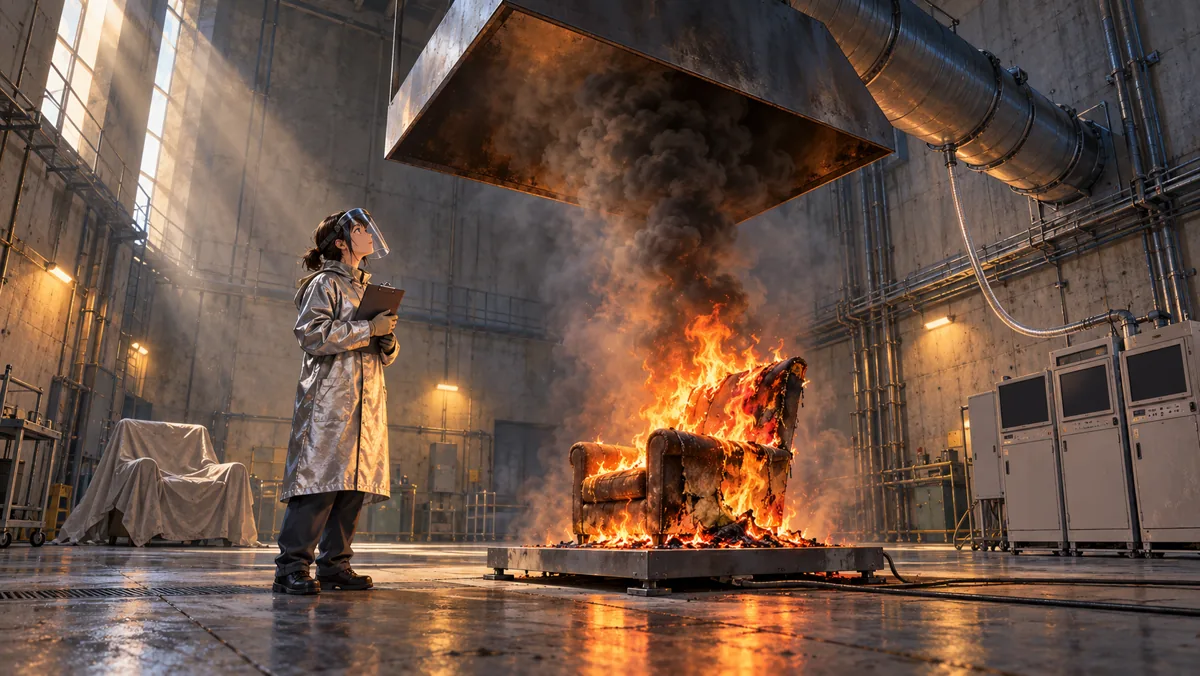
A fire is measured by the oxygen it takes
Per kilogram of fuel, the things we burn differ more than threefold. Per kilogram of oxygen, most of them land within 5% of one number, because the heat is set by what the oxygen becomes, and in a clean flame it becomes one of two things.
01.10.2026
-
Switching off a thousand devices can cost less than switching off one
A disc cannot ask who is playing it, so a revocation has to be broadcast to everybody at once. The scheme every Blu-ray uses prices that broadcast by how the broken devices are arranged in the key tree, and the size of the audience does not appear in the bound at all.
12.09.2026