L2: school
Clocks in the rock
BIOOne exponential, read three ways. Forwards it tells you how much is left; backwards it tells you how old something is; and applied to DNA rather than to nuclei it needs a rock to set it by.
Interactive Math & Science Lessons
Biology looks like a subject made of exceptions until you start counting. Dose, inheritance, population and reaction rate follow rules tight enough to predict, and predicting them is what these tools do.
Short sequences rather than single tools. Each step hands the next one something specific, so they are worth doing in order.
L2: school
BIOOne exponential, read three ways. Forwards it tells you how much is left; backwards it tells you how old something is; and applied to DNA rather than to nuclei it needs a rock to set it by.
L2: school
STATNobody objects to the arithmetic in Bayes' theorem. They object to the prior — where the first number came from, and who chose it. These three tools take that question in the order it gets harder: a prior you can look up, a prior the apparatus hands you, and a prior nobody has.
L2: school
GEOOn a curved surface the rules proved on paper stop holding, and the amount by which each one fails measures the curvature from inside. A straight route changes its compass heading, an arrow carried without turning comes home turned, a ring comes out the wrong length, and in the hyperbolic plane no triangle can hold more than π.
L2: school
CHEMThe heat a reaction gives out does not decide whether it runs; ice melts by taking heat in. These four pages build the bookkeeping that does decide: enthalpy, which adds like equations; standard free energy, which is an equilibrium constant in other units; the difference between moving K and moving Q; and a battery that reads that difference as a voltage.
L2: school
CHEMA gas in a mixture acts at its own partial pressure, which sets a diver's depth limit. A liquid boils where its vapour pressure meets the pressure above it. Two liquids that mix badly stop a still at about 95.6% ethanol by mass, dissolved particles make one kelvin of frost worth thirteen bar of osmotic pressure, and a salt dissolves only until its ions reach a fixed product.
L2: school
BIOEvery population here is held back by something, and the something gets less obliging at each step: first the crowding it causes itself, then a fixed catch taken off the top, then a predator that is a population in its own right, and finally running out of people left to infect.
L3: undergraduate
PHYThree equations built on one operator, the Laplacian, that differ only in what time does. Heat forgets, the sharpest detail first. A wave carries a disturbance away, and on a sheet never quite finishes arriving. Laplace's equation has no time in it at all, and it is where heat forgets its way to: every point the average of its neighbours.
L3: undergraduate
GEOA forecast is a model run forward from a starting state nobody knows exactly, so forecasters run it many times and let the disagreement say how far to trust it. The second page opens the model and finds a way to fail that has nothing to do with chaos. The third goes back to Lorenz's equations of 1963, where the run's position is soon lost and the shape it draws never is.
L4: specialist
BIOFive tools that build one argument: DNA is a real storage medium and a real computer, and both run into limits you can calculate rather than guess at. Each step hands the next a specific number.
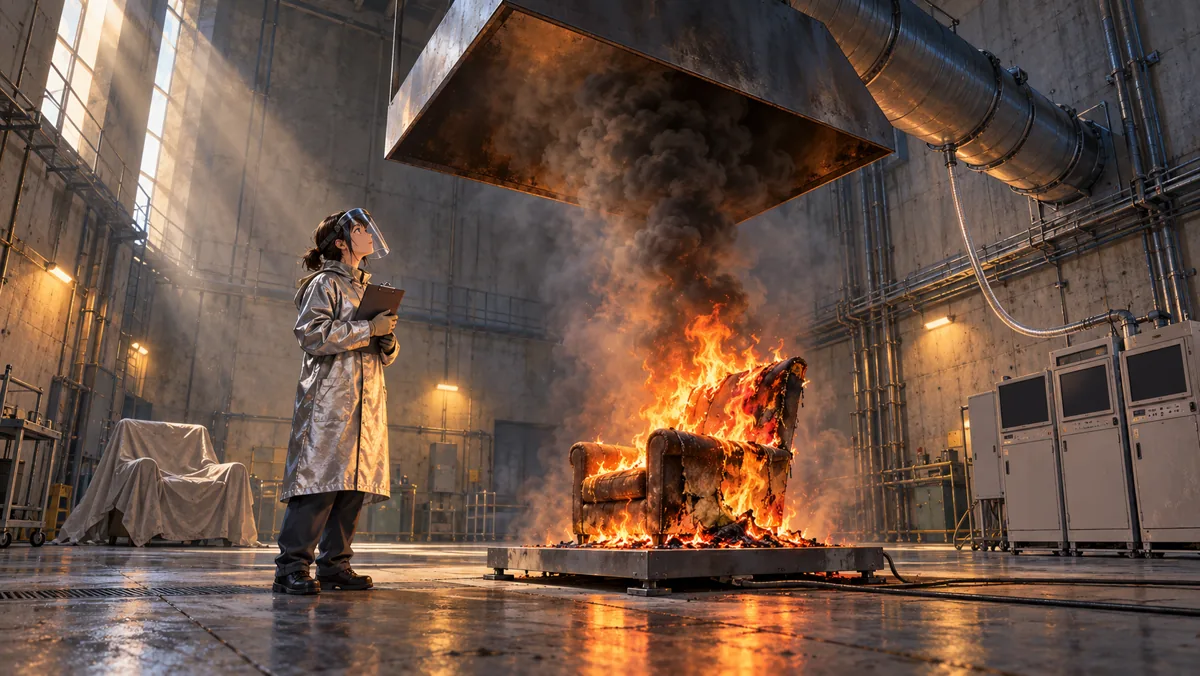 A fire is measured by the oxygen it takes
Per kilogram of fuel, the things we burn differ more than threefold. Per kilogram of oxygen, most of them land within 5% of one number, because the heat is set by what the oxygen becomes, and in a clean flame it becomes one of two things.
A fire is measured by the oxygen it takes
Per kilogram of fuel, the things we burn differ more than threefold. Per kilogram of oxygen, most of them land within 5% of one number, because the heat is set by what the oxygen becomes, and in a clean flame it becomes one of two things.
 The 475-year earthquake is not geology
Two odd numbers are stamped on seismic design maps worldwide. Neither was measured. Both are a tolerated failure probability run through one line of algebra — and the same line explains why a 100-year flood is a coin-flip over a lifetime.
The 475-year earthquake is not geology
Two odd numbers are stamped on seismic design maps worldwide. Neither was measured. Both are a tolerated failure probability run through one line of algebra — and the same line explains why a 100-year flood is a coin-flip over a lifetime.
 Thirty-nine cities need more DNA than the Earth
DNA computing promised to beat exponential search with molecular parallelism. The counting that kills it is the argument Levinthal used to prove that proteins cannot be searching for their shape — and what survives the argument is not speed at all.
Thirty-nine cities need more DNA than the Earth
DNA computing promised to beat exponential search with molecular parallelism. The counting that kills it is the argument Levinthal used to prove that proteins cannot be searching for their shape — and what survives the argument is not speed at all.
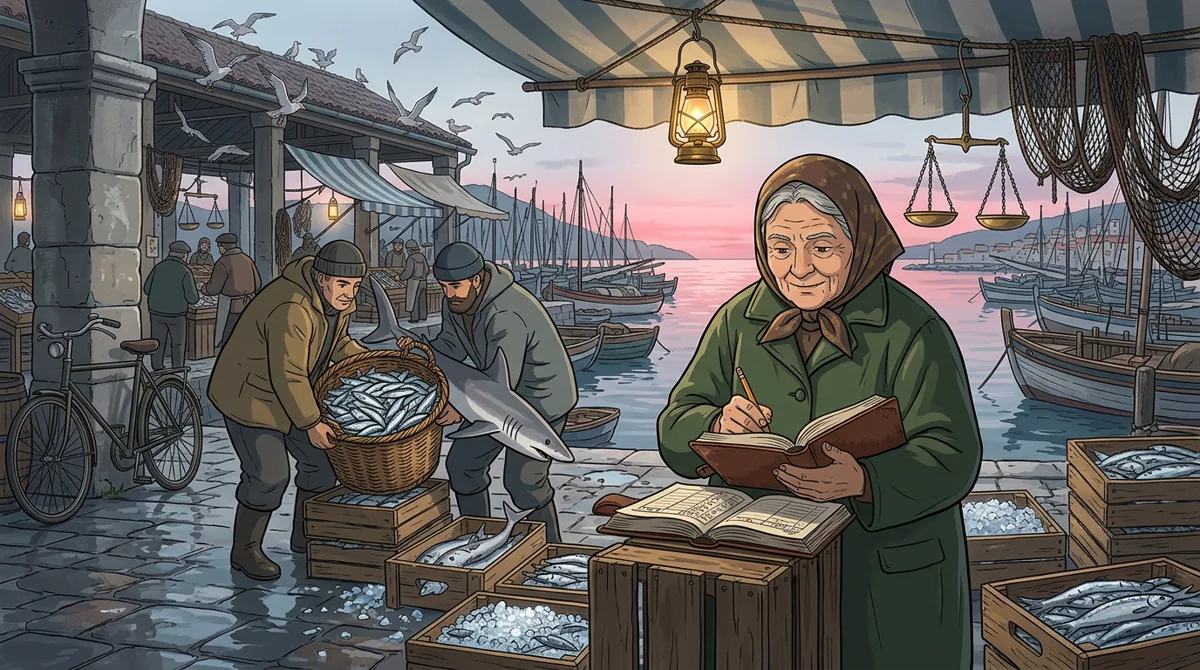 Kill both species at the same rate and you get more of the pest
The predator–prey model has an exact long-run average, and it sits in a strange place: raise the death rate of both species equally and the average prey population goes up. Volterra found it in fish-market ledgers in 1926.
Kill both species at the same rate and you get more of the pest
The predator–prey model has an exact long-run average, and it sits in a strange place: raise the death rate of both species equally and the average prey population goes up. Volterra found it in fish-market ledgers in 1926.
 Below one it dies out. Above one it runs away. There is nothing in between.
The same threshold governs epidemics, nuclear chain reactions, PCR and surnames: if each unit produces on average fewer than one successor, extinction is certain. The knife edge is exactly at 1, and the mathematics was first worked out on Victorian family names.
Below one it dies out. Above one it runs away. There is nothing in between.
The same threshold governs epidemics, nuclear chain reactions, PCR and surnames: if each unit produces on average fewer than one successor, extinction is certain. The knife edge is exactly at 1, and the mathematics was first worked out on Victorian family names.
 The herd immunity threshold is 66.7%, so why does the epidemic infect 94.1%?
The threshold is where an outbreak stops growing, which is nowhere near where it stops. It keeps infecting people well past that point, and the size of that overshoot is the argument for arriving at the threshold by vaccination rather than by illness.
The herd immunity threshold is 66.7%, so why does the epidemic infect 94.1%?
The threshold is where an outbreak stops growing, which is nowhere near where it stops. It keeps infecting people well past that point, and the size of that overshoot is the argument for arriving at the threshold by vaccination rather than by illness.
 Fifty generations of perfect selection halves a recessive gene, and that is the best case
Suppose a recessive condition were lethal in every case, in every generation, with no exceptions. After fifty generations the allele has gone from 2% to 1%. The arithmetic explaining why was published in 1908.
Fifty generations of perfect selection halves a recessive gene, and that is the best case
Suppose a recessive condition were lethal in every case, in every generation, with no exceptions. After fifty generations the allele has gone from 2% to 1%. The arithmetic explaining why was published in 1908.
 A radioactive atom does not know how old it is
An atom that has already survived a million years is exactly as likely to decay in the next second as one created moments ago. Exponential decay is the only continuous law with that property, and it is why half-life is a meaningful number at all.
A radioactive atom does not know how old it is
An atom that has already survived a million years is exactly as likely to decay in the next second as one created moments ago. Exponential decay is the only continuous law with that property, and it is why half-life is a meaningful number at all.
 A magnitude 7 is not slightly worse than a magnitude 6
It releases about 32 times the energy. Logarithmic scales compress catastrophes into numbers that look adjacent, which is exactly the problem with reporting them.
A magnitude 7 is not slightly worse than a magnitude 6
It releases about 32 times the energy. Logarithmic scales compress catastrophes into numbers that look adjacent, which is exactly the problem with reporting them.