Bayes Theorem / False Positive Explorer
how prevalence changes positive-test reliability
why accuracy is only half the story 🖖
Sensitivity and specificity describe the test; prevalence describes the population before testing. Bayes theorem combines both. When prevalence is low, even a small false-positive rate can create many false alarms because most tested people do not have the condition. That is why a positive screening result often needs confirmation, while the same test can be highly persuasive in a high-risk group.
a test updates a belief, it doesn't replace it 🖖
Bayes theorem is a rule for changing your mind with evidence. You start with a prior — your best estimate before testing, which here is the prevalence — and the result nudges it up or down into a posterior. A single positive rarely jumps you straight to certainty; it multiplies your starting odds rather than overwriting them. The takeaway: before trusting any result, first ask how likely the thing was in the first place.
the same trap sent someone to prison 🖖
Confusing P(positive | disease) with P(disease | positive) has a courtroom name: the prosecutor's fallacy. In the 1999 trial of Sally Clark, a jury heard that two cot deaths in one family had a 1-in-73-million chance and treated it as the chance she was innocent. Those are different numbers — the second ignores how rare the alternative (a double murder) also is. Her conviction was overturned in 2003, and the Royal Statistical Society publicly condemned the misuse.
Example problems
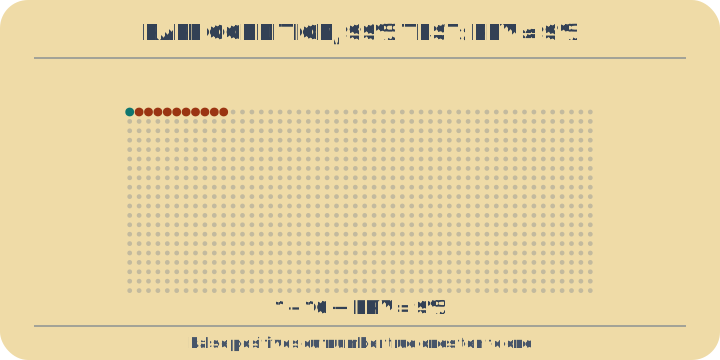
- rare, accurate test - prev=0.1%, 99%-accurate test -> PPV only 9%: most positives are false alarms
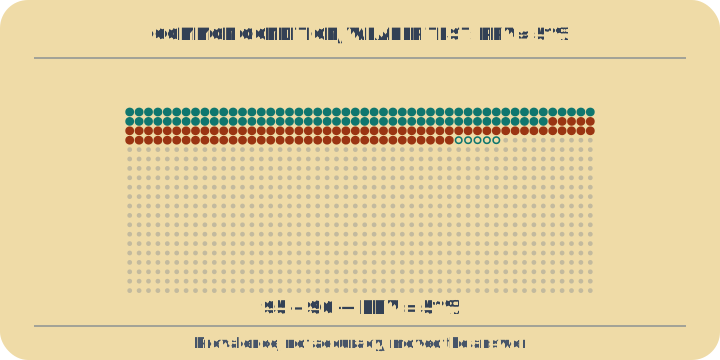
- more common disease - prev=10% -> PPV rises to 51%; prevalence is the hidden lever
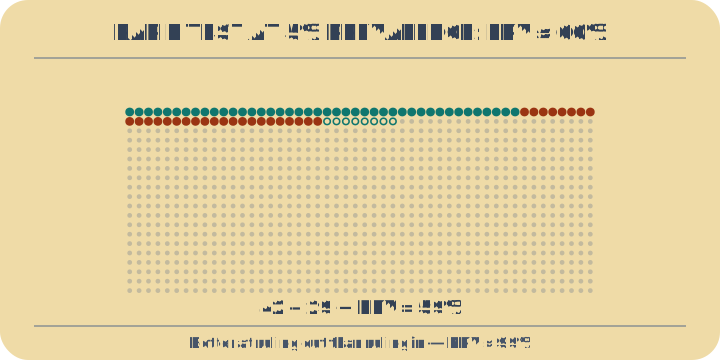
- covid-like - COVID rapid test at 5% prevalence -> PPV ~ 60%
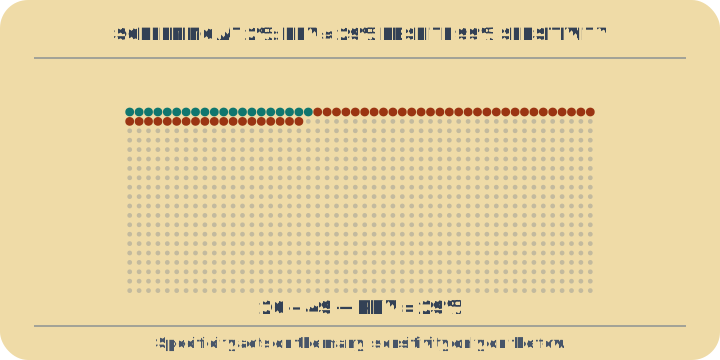
- drug screening - Drug screening at 2% prevalence -> PPV ~ 29% despite 99% sensitivity