Snell's Law Refraction Simulator

Drag the angle slider to see how light bends when crossing a boundary between two media.

Loading interactive simulation...

Phase velocity mismatch and refractive boundaries 🖖

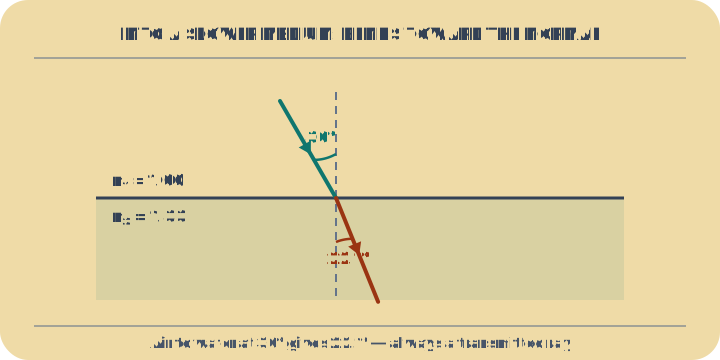
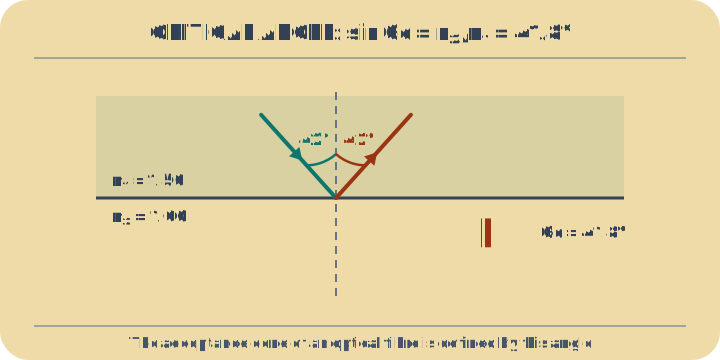
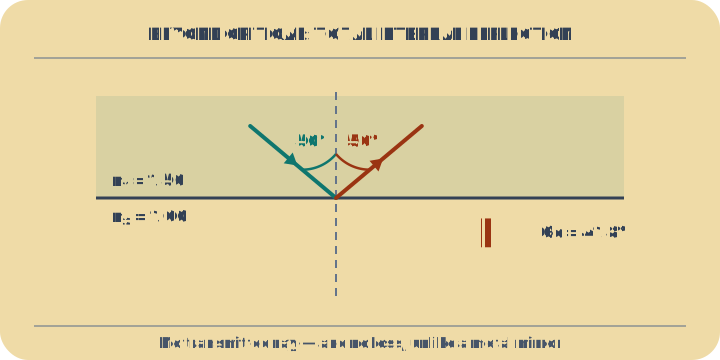
Snell's law, n₁ sin(θ₁) = n₂ sin(θ₂), describes the change in direction of a wave crossing a boundary between media with different refractive indices. This bending is caused by the difference in phase velocity of light in the media: v = c/n. When light moves from a denser medium to a less dense one, it bends away from the normal, leading to total internal reflection when the critical angle is exceeded.

Why a straw looks bent in water 🖖

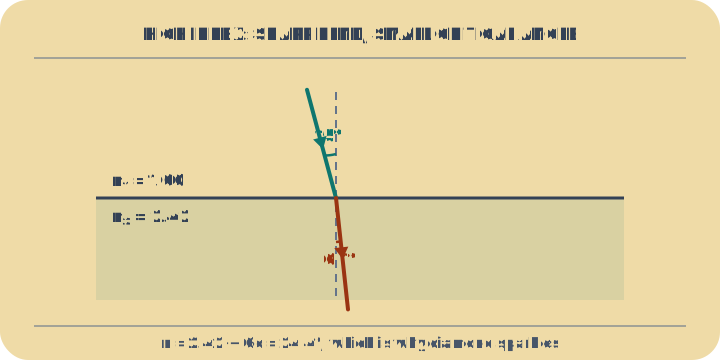
When light passes from one material into another — say from water into air — it changes speed, and that speed change makes it bend at the surface. Snell's law, n₁ sin(θ₁) = n₂ sin(θ₂), turns this into an exact prediction of the new angle. The bigger the difference between the two refractive indices, the sharper the bend. That is why a straw in a glass of water looks broken at the waterline: light from its lower half reaches your eye along a bent path.

Light takes the fastest route, not the shortest 🖖

Fermat's principle says light travels between two points along the path that takes the least time — and Snell's law drops straight out of that rule. Because light is slower in the denser medium, bending at the boundary lets it cover less distance in the slow material, just as a lifeguard runs farther on sand to swim less in the water. Setting the total travel time to a minimum reproduces n₁ sin(θ₁) = n₂ sin(θ₂) exactly.

Example problems