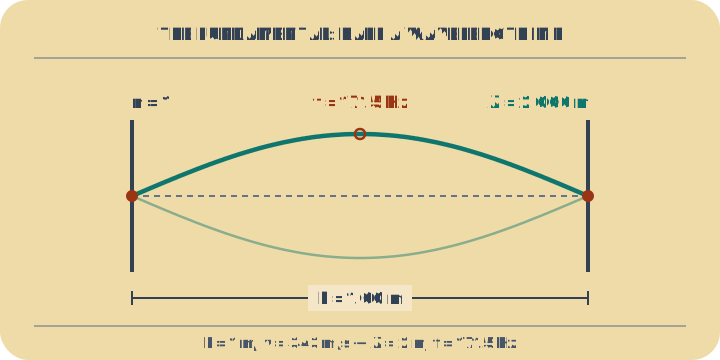
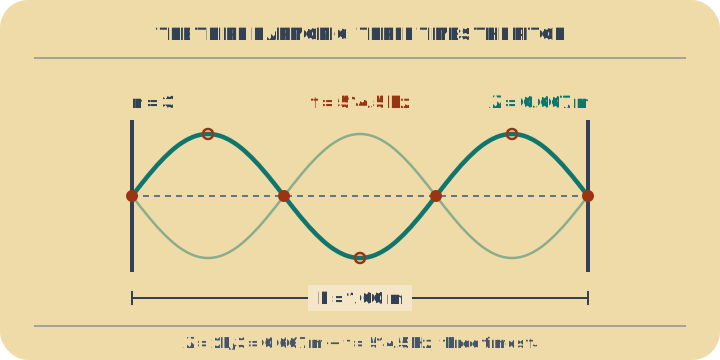
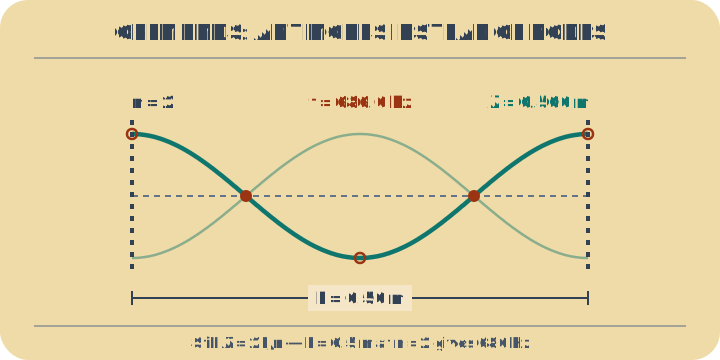
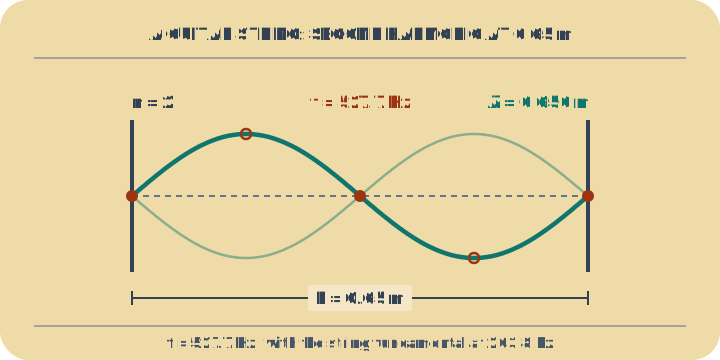
A string clamped at both ends cannot vibrate at just any frequency. The ends are forced to stay still, so the only patterns that survive are those fitting a whole number of half-wavelengths between them: λ = 2L/n. Since frequency is speed divided by wavelength, the allowed frequencies come out as exact integer multiples of the lowest one, fₙ = n · f₁. This tool’s 1 m string at 343 m/s reads 171.5 Hz at n = 1 and exactly 514.5 Hz at n = 3 — three times over, not merely nearby. That integer relationship is what the ear hears as a single pitch with a timbre rather than as a chord or a noise, and it is why a guitar and a flute can be in tune with each other at all.