L1: 基礎
多くのデータを1つの数字で:要約統計
MATHここにある三つのツールは、ひとつの授業を形作ります。要約値とはいわば非可逆圧縮であり、どのように圧縮するかが、その要約が何を正しく伝えているかを決定づけます。それぞれのステップは、単一の数値による要約が抱える特有の限界を浮き彫りにし、その課題を次のステップへと手渡していくのです。
インタラクティブな数学・理科レッスン (ノ◕ヮ◕)ノ*:・゚✧
いくつかの規則を決めた時点で、その帰結はもう自分の裁量ではなくなります。そこから導かれるものが予想どおりであることはまれで、ここにあるツールは、どの帰結を引き受けることになったのかを見せるためにあります。
単体のツールではなく、短い系列として。各ステップは次のステップに具体的なものを渡すので、順番に進める価値があります。
L1: 基礎
MATHここにある三つのツールは、ひとつの授業を形作ります。要約値とはいわば非可逆圧縮であり、どのように圧縮するかが、その要約が何を正しく伝えているかを決定づけます。それぞれのステップは、単一の数値による要約が抱える特有の限界を浮き彫りにし、その課題を次のステップへと手渡していくのです。
L1: 基礎
MATH三角形と円に関する基本的な定理を、実際の依存関係に沿って導き出す六つのツール。根拠なく主張される事柄は一つもありません。すべての法則が、直前の法則の必然的な帰結として現れます。そして道のりの最後で最初の法則を座標平面上に置き直したとき、距離の公式へと姿を変えるのです。
L1: 基礎
MATH三つのツールが一つの筋道をつくります。世の中には最後まで書き切れない数があります。その数にもっとも近い短い表し方は当てづっぽうではなく探し出せますし、数を打ち切ることには測れる代償があります。
L1: 基礎
MATH方程式の解法を、概念が本来依存しあう順序で組み立てていく六つのツールです。マイナス記号の働きから出発し、最後は三つの未知数を一度に解く機械的な手法へと至ります。各段階は、次の段階へ具体的なものを一つ手渡します。式の操作、操作に対する制限、あるいはその操作が数学的に許されるかどうかの判定です。
L2: 中等
MATH四つのツールが形作る、一つの概念。お金は時点が異なれば価値も変わるということ、そして繰り返される支払いは一つの数式に集約できるということです。ここにある各ステップは、次のステップへと特定の要素を確実に手渡していきます。
L2: 中等
MATH誕生日問題は一見するとパーティーの余興のようですが、実は衝突について考察するための標準的な道具なのです。そして続く第2段階で、計算機科学者たちは別の名前で再びこの問題に出会うことになります。
L2: 中等
MATH両辺が定義されている角なら、恒等式は常に成り立ちます。問題で与えられた関数を、求めたい関数へと自在に置き換えられるのはそのためです。本章は、逆数関数と三つのピタゴラスの恒等式から始まります。電卓が返してくる逆三角関数、そこから導かれる方程式、そして加法定理。さらにその先にある倍角の公式や三角関数の合成、恒等式の証明へと歩みを進めます。
L2: 中等
MATH三つの道具。この一連の学習の核心は、これらが三つの別々のテーマではないという点にあります。正弦波とは等速円運動を真横から見た姿であり、重力がその回転を担うとき、それは揺れる振り子として現れるのです。
L2: 中等
MATHひとつのアイデアをめぐる、五つのツール。なめらかな曲線は、十分に拡大すると直線と区別がつきません。導関数が測るもの、テイラー展開が拡張するもの、そして複数の方向において勾配が行うこと。そのすべてが、この単一の事実に基づいているのです。道のりは、計算がすっきりとまとまる角度の測り方から出発します。そして最後には、最も急な傾斜が、実際に測ったどの方向をも上回る丘の斜面へと至ります。
L2: 中等
MATH導関数とは変化率です。微分の公式はどれも、それらの変化率がどう結びつくかを教えてくれます。関数の積として掛け合わされているとき、別の関数の内側に入り込んでいるとき、あるいは誰も y について解いていない方程式のままのとき。最後の二つのページでは、実際の講義で問われる実践的な問題へとこれらの公式を役立てます。ある一瞬の変化の速さ、そしてどれが最善の選択かという問いです。
L3: 学部
MATH散らばった点の集まりを、確かな根拠のある数値へと変える七つの道具。そこから、その数値がどうやって導かれたのか、どの程度信用できるのか、誰も正解を教えてくれない時に何が起きるのかを問いかけ、最後には、最初から確率でしかなかった予測をどう評価するのかへと向かいます。この道筋では統計学よりも幾何学を辿ります。幾何学こそが、統計を嘘のない誠実なものにしてくれるからです。
L3: 学部
MATH四つのゲームと一つの操作。それは、相手がどんな手に出ようと最適な応答となる手を見つけ出すことだ。第一のゲームはそれ単独で決着がつく。第二のゲームではその位置を特定するのにマス目全体を要し、第三のゲームでは代償を伴う。そして第四のゲームにおいては、誰も計算などしない。それにもかかわらず、集団は自ずと答えに行き着くのだ。
L3: 学部
MATH無限和は有限和の極限です。この極限は、有限の和を扱う際には全く問題にならない要素に左右されます。項の順序、そして最も近い特異点の位置です。特異点が実軸上にない場合すら例外ではありません。
L3: 学部
MATHニュートン法、シンプソンの公式、そしてオイラー法。これらはみな、同じ一つのエンジンで動いています。十分に小さな区間のなかでは、曲線を直線とみなすという仕組みです。だからこそ、どの手法にもバグではない、必然的な破綻が存在します。どの破綻がどの手法に属しているのか。それを知ることこそが、生きた知識となるのです。ここでのすべてのステップは、固有の名前を持つ誤差とそれが縮小していく割合を、次のステップへと手渡していきます。
L3: 学部
MATH積分とは、こまやかに積み重なった総量のこと。面積も移動距離も体積も、すべてその現れです。本章では「積み重なり」と「変化率」を結びつける定理から解き起こし、二つの曲線に挟まれた面積、物体の運動、断面のスライスから求める体積へと視野を広げていきます。
L3: 学部
PHYひとつの演算子であるラプラシアンを土台としながら、時間の振る舞いだけが異なる三つの方程式。熱は忘却します。最も鋭い細部から先に。波は乱れを彼方へ運び去りますが、平面上ではいつまでも波紋が届き終えることはありません。ラプラス方程式には時間が一切含まれません。それは熱が忘却の果てに行き着く先、すなわち、すべての点が周囲の平均値と等しくなった状態なのです。
 An antiderivative with no formula, and an area of exactly ln 2
The rules of the integration chapter get nowhere with (x − 1)/ln x. The area under it from 0 to 1 is still exactly ln 2, and the route there is three lines long once you give the integral a dial to turn.
An antiderivative with no formula, and an area of exactly ln 2
The rules of the integration chapter get nowhere with (x − 1)/ln x. The area under it from 0 to 1 is still exactly ln 2, and the route there is three lines long once you give the integral a dial to turn.
 Every rule you memorised in algebra is about the same one move
There are two moves in school algebra: add something to both sides, or multiply both sides by something. Adding has never needed a warning, and every rule you had to memorise is about the other one.
Every rule you memorised in algebra is about the same one move
There are two moves in school algebra: add something to both sides, or multiply both sides by something. Adding has never needed a warning, and every rule you had to memorise is about the other one.
 The fraction for π that nothing smaller has beaten in 1,500 years
Zu Chongzhi wrote down 355/113 in the fifth century. It is still the best fraction for π that anyone can reach with three digits over three, and the reason is a single large number sitting in π’s continued fraction.
The fraction for π that nothing smaller has beaten in 1,500 years
Zu Chongzhi wrote down 355/113 in the fifth century. It is still the best fraction for π that anyone can reach with three digits over three, and the reason is a single large number sitting in π’s continued fraction.
 Two countries measured the same border and disagreed by 227 kilometres
Spain put its border with Portugal at 1,214 km. Portugal put the same border at 987 km. Both had measured carefully; they had used different rulers, and a shorter ruler always finds more coast.
Two countries measured the same border and disagreed by 227 kilometres
Spain put its border with Portugal at 1,214 km. Portugal put the same border at 987 km. Both had measured carefully; they had used different rulers, and a shorter ruler always finds more coast.
 π is in the bell curve, and there is no circle anywhere in it
Drop needles on floorboards and you can measure π. Collide two blocks and you can count it. Neither has a circle anywhere in it. π is really about rotation and the sum of two squares; circles are just where most of us meet it first.
π is in the bell curve, and there is no circle anywhere in it
Drop needles on floorboards and you can measure π. Collide two blocks and you can count it. Neither has a circle anywhere in it. π is really about rotation and the sum of two squares; circles are just where most of us meet it first.
 You typed one digit. The answer came back with six.
A calculator cannot be more precise than what you fed it, and none of them say so. Here is what the extra digits actually mean, why a reciprocal is the worst place to forget it, and why this site prints them anyway.
You typed one digit. The answer came back with six.
A calculator cannot be more precise than what you fed it, and none of them say so. Here is what the extra digits actually mean, why a reciprocal is the worst place to forget it, and why this site prints them anyway.
 Halving the step size should halve the error. The tool says 1.73.
"First order" is a promise about the limit, not about the step size you are running. The gap between the promise and the measurement is itself first order, which is why an error estimate built on the promise is wrong in a predictable direction.
Halving the step size should halve the error. The tool says 1.73.
"First order" is a promise about the limit, not about the step size you are running. The gap between the promise and the measurement is itself first order, which is why an error estimate built on the promise is wrong in a predictable direction.
 Newton's method can double its mistake every step, and the answer was 0.01 away
The standard way to solve an equation numerically converges so fast it feels like cheating. Give it the cube root and it walks away from the answer, doubling the distance every step, forever.
Newton's method can double its mistake every step, and the answer was 0.01 away
The standard way to solve an equation numerically converges so fast it feels like cheating. Give it the cube root and it walks away from the answer, doubling the distance every step, forever.
 Primes thin out at a rate you can name
The density of primes near a number n is about one in ln n. That one fact tells you how many primes lie below any bound, why they never run out, and how long a computer must search to find a 1024-bit one.
Primes thin out at a rate you can name
The density of primes near a number n is about one in ln n. That one fact tells you how many primes lie below any bound, why they never run out, and how long a computer must search to find a 1024-bit one.
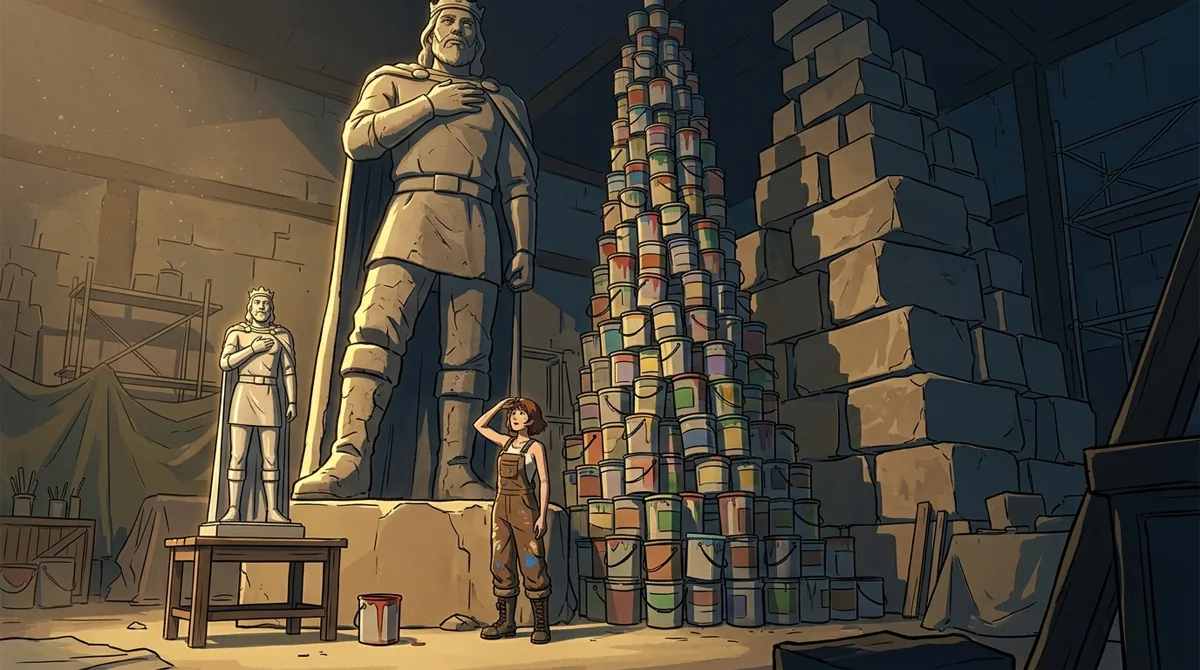 Twice as tall is four times the paint, and eight times the concrete
Lengths scale as k, areas as k² and volumes as k³. Getting this wrong is probably the most expensive arithmetic mistake ordinary people make.
Twice as tall is four times the paint, and eight times the concrete
Lengths scale as k, areas as k² and volumes as k³. Getting this wrong is probably the most expensive arithmetic mistake ordinary people make.
 The rule that was the ceiling of arithmetic for a thousand years
Cross-multiplication is usually dismissed as a procedural trick. It was written down in 628 CE, carried across three continents, and was the end of the mathematics syllabus for most people who ever received one.
The rule that was the ceiling of arithmetic for a thousand years
Cross-multiplication is usually dismissed as a procedural trick. It was written down in 628 CE, carried across three continents, and was the end of the mathematics syllabus for most people who ever received one.
 Every football has twelve pentagons, and it could not have any other number
Any closed cage of pentagons and hexagons with three faces at each corner has exactly twelve pentagons. Always twelve, whatever size the ball, and the proof never counts a single one.
Every football has twelve pentagons, and it could not have any other number
Any closed cage of pentagons and hexagons with three faces at each corner has exactly twelve pentagons. Always twelve, whatever size the ball, and the proof never counts a single one.
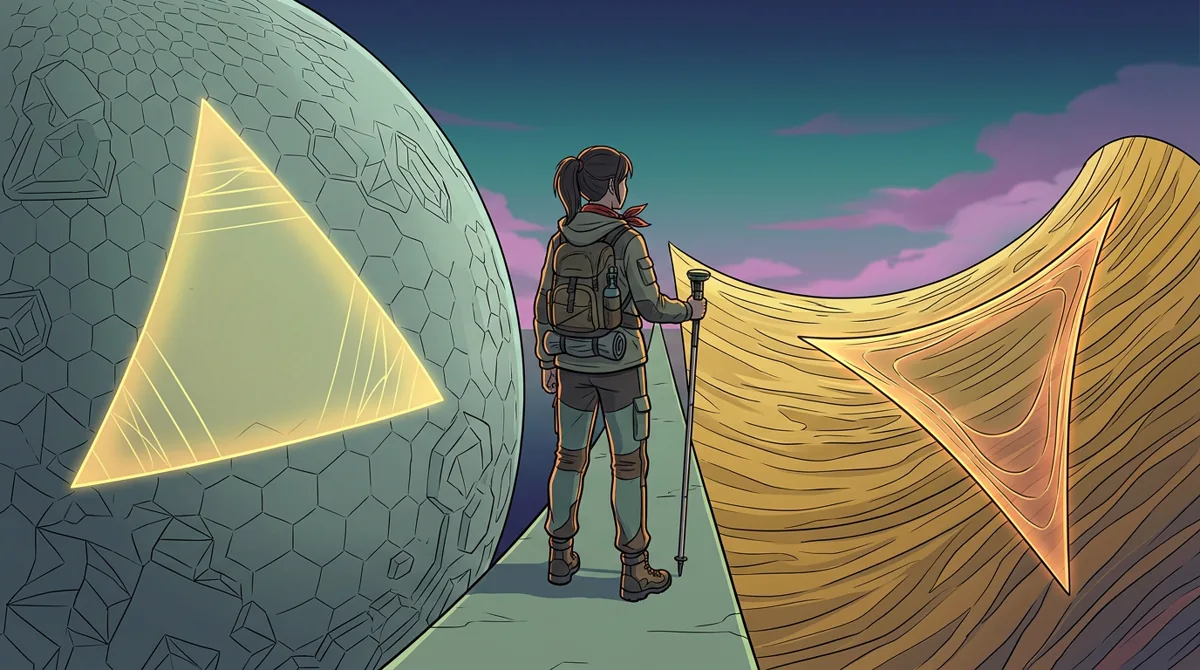 Pythagoras is not a fact about triangles
a² + b² = c² fails on a sphere and fails the other way in hyperbolic space. What the theorem actually asserts is that the surface you are standing on is flat.
Pythagoras is not a fact about triangles
a² + b² = c² fails on a sphere and fails the other way in hyperbolic space. What the theorem actually asserts is that the surface you are standing on is flat.